

Anesthesia
Wisdom teeth removal is a 30- to 90-minute outpatient surgery that takes out one to four third molars, usually under IV sedation, with most patients back to work or school in three to five days. At Cherry Creek Oral Surgery in Denver, Dr. John Nesiba, MD, DDS, a triple board-certified oral and maxillofacial surgeon, removes more than 2,500 wisdom teeth a year with IV sedation delivered in our own office. No referral is needed.
Wisdom Teeth Removal

Wisdom teeth removal is a 30- to 90-minute outpatient surgery that takes out one to four third molars, usually under IV sedation, with most patients back to work or school in three to five days. At Cherry Creek Oral Surgery in Denver, Dr. John Nesiba, MD, DDS, a triple board-certified oral and maxillofacial surgeon, removes more than 2,500 wisdom teeth a year with IV sedation delivered in our own office. No referral is needed.
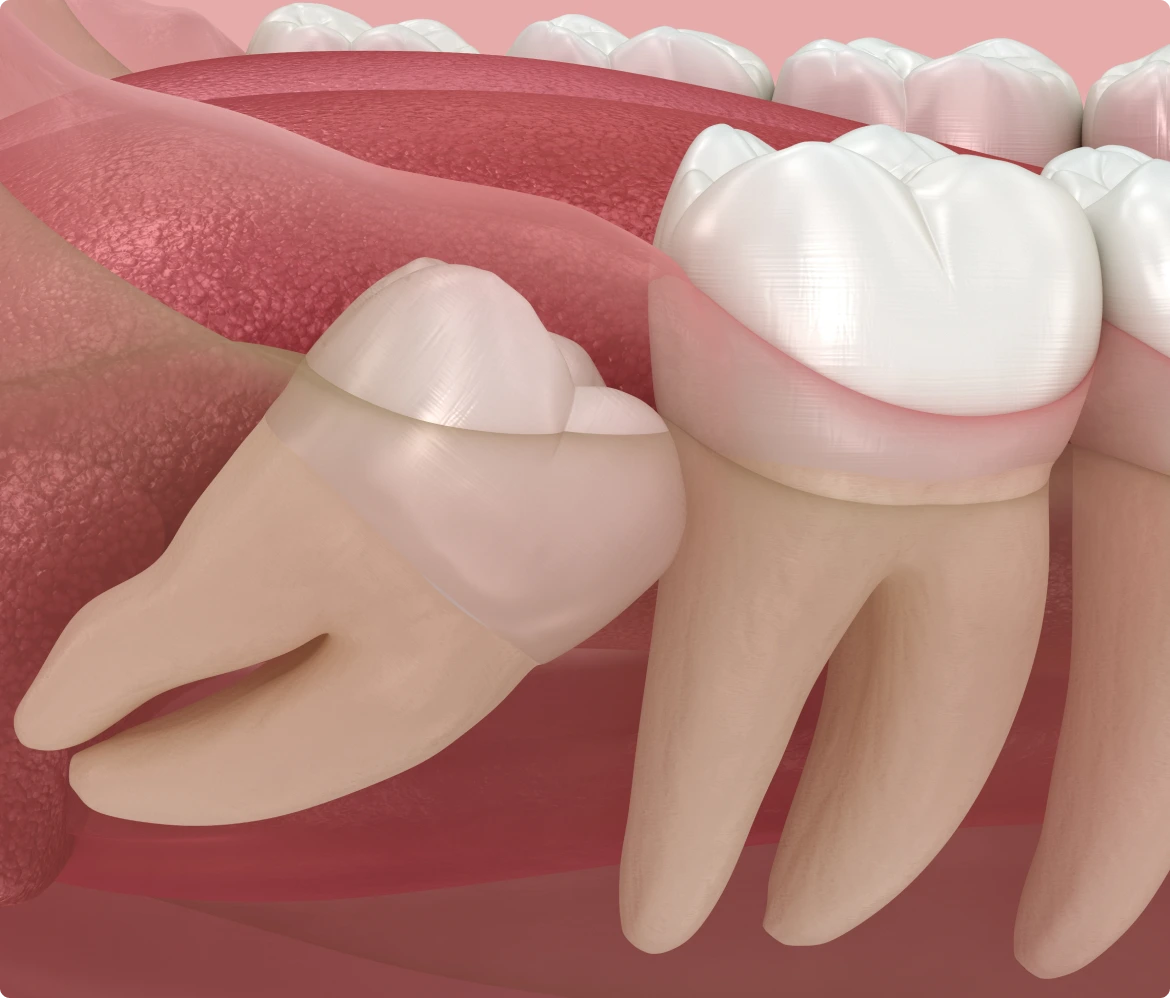
Wisdom teeth removal is the surgical extraction of the third molars, the last teeth to erupt at the very back of the mouth, usually between ages 17 and 25. According to the American Association of Oral and Maxillofacial Surgeons, nine out of ten people have at least one impacted wisdom tooth, meaning it cannot fully erupt. Impacted teeth can trap food and bacteria, damage the neighboring molar, and form cysts. The procedure numbs or sedates you, removes the tooth (sometimes in sections), and closes the site; it takes 30 to 90 minutes depending on how many teeth are removed and how deeply they sit. Dr. Nesiba performs both simple tooth extractions and complex impacted wisdom teeth removal in our Denver office.
A simple extraction is performed when the wisdom tooth has fully erupted and has enough gum tissue and bone surrounding it. Dr. Nesiba numbs the area, makes a small incision in the gum, and uses special tools to loosen and remove the tooth. This is the easiest and quickest method.
An impacted extraction is done when the wisdom tooth is trapped below the surface of the gums and pushing against the other teeth. Dr. Nesiba numbs the area, makes an incision, removes some bone if needed, and eliminates the tooth. Extraction of impacted wisdom teeth takes more time, and recovery can be more difficult.
Sectioning refers to cutting a wisdom tooth into smaller pieces so it can be removed more easily. This is done when the tooth is severely impacted or hooked around healthy teeth and roots. Dr. Nesiba sections the tooth before taking each piece out individually. This protects other teeth and makes a complex extraction easier.
The American Dental Association notes that wisdom teeth which are kept must still be monitored, because problems can develop later. Dr. Nesiba reviews a panoramic X-ray at your consultation and will tell you plainly whether your teeth should come out now, be watched, or be left alone.
Typically, the process begins with a consultation appointment to evaluate the status of the wisdom teeth. During this meeting, Dr. Nesiba examines the third molars visually and via dental X-rays to assess their position, health, and potential impact on surrounding teeth and tissues. After an oral examination, he determines whether removal is necessary and discusses options and timelines for surgery.


Day of surgery: you go home with a driver, bite on gauze for 30 to 45 minutes, and start ice packs and the medication we prescribe. Some oozing is normal. Days 1 to 3: swelling and soreness peak, then begin to ease. Most of our Denver patients manage with ibuprofen and acetaminophen; many tell us they stopped stronger medication after a day or two. Rest, keep your head elevated, and do not smoke or use a straw.
Days 4 to 7: swelling fades and most people return to work, school and light activity by day five. Stay on soft foods such as yogurt, mashed potatoes, oatmeal, eggs and soup, and skip the gym for at least 48 to 72 hours. Week 2: stitches dissolve and chewing becomes normal on the other side of the mouth. Weeks 3 to 4: the sockets close over and most patients are back to all their usual foods.
Starting the day after surgery, rinse gently with warm salt water and brush carefully around the sites. Cleveland Clinic puts full recovery at about two weeks for most people, which matches what we see in our Denver office. Our full written instructions are on the after wisdom teeth removal page, and the surgical team is a phone call away at (303) 777-1603 if anything feels off.

Symptoms like pain, swelling, infections, or cysts associated with wisdom teeth indicate that removal is necessary. This surgery helps alleviate discomfort.
Braces or clear aligners can put pressure on wisdom teeth, leading to complications. Taking them out may allow patients to achieve orthodontic or natural alignment.
If extensive dental treatments (e.g., implants or bridges) are planned, Dr. Nesiba may extract wisdom teeth first to avoid later problems.
Published national averages give a useful starting point. CareCredit’s 2024 cost guide reports an average of about $363 for a surgical extraction (range $281 to $702), $532 for a partial bony impaction (range $413 to $1,041), and $835 for a fully bony or complicated impaction (range $639 to $1,620) per tooth, plus about $349 for IV sedation. Removing all four wisdom teeth with sedation typically lands between $1,200 and $4,175 nationally. Denver-area pricing generally tracks these figures.
Those numbers are market averages, not Cherry Creek Oral Surgery’s fee. Your actual cost depends on how many teeth are removed, how deeply they are impacted, and the anesthesia you choose. Most dental plans cover a portion of wisdom teeth removal, often 50 to 80 percent after the deductible, and we are in-network with Delta Dental, Cigna, Aetna, MetLife, Guardian, Humana, United Healthcare and more, with CareCredit, Alphaeon Credit and PatientFi financing available (see our insurance and financing page). Book a consultation with Dr. Nesiba for an accurate, written quote based on your X-ray.
Dr. John R. Nesiba, MD, DDS, is board-certified by the American Board of Oral and Maxillofacial Surgery, the American Board of Facial Cosmetic Surgery and the American Board of Cosmetic Surgery. He earned his DDS at the University of Nebraska and completed a six-year residency at the Detroit Medical Center that included a medical degree and formal anesthesia training, which is why he can deliver IV sedation himself, in our own office, for more than 2,000 cases a year. Our Denver patients have left 258 Google reviews averaging 4.86 stars, and more than a hundred of them mention wisdom teeth. Duranya F. had three removed at 30 with “zero complications” and did not need stronger pain medication after the first day or two; Trevor U., referred by his dentist as an older patient, called his recovery “virtually painless”; and Rae T., who had a panic attack before surgery, says the team calmed her and recommends us to anyone with dental anxiety.

National averages published by CareCredit’s 2024 cost guide run from about $363 per tooth for a simple surgical extraction to $835 for a fully impacted tooth, plus roughly $349 for IV sedation, so all four teeth typically total $1,200 to $4,175 before insurance. Colorado pricing is generally in line with those figures. They are market averages, not our fee; book a consultation and Dr. Nesiba will give you an exact written quote from your X-ray.
Rarely in full. Most dental plans cover 50 to 80 percent of extractions after your deductible and annual maximum, and medical insurance sometimes contributes when teeth are impacted or infected. Cherry Creek Oral Surgery is in-network with Delta Dental, Cigna, Aetna, MetLife, Guardian, Humana, United Healthcare, Anthem and others, and our team verifies your benefits before surgery. See our insurance and financing page.
No. Removal is simplest in the late teens and early twenties when roots are shorter, but adults in their thirties, forties and beyond have their wisdom teeth removed safely every week in our Denver office. Healing may take a few extra days. Dr. Nesiba, who removes more than 2,500 wisdom teeth a year, reviews your X-ray to plan the safest approach for your age and anatomy.
The surgery itself is not painful because you are numbed and, for most of our patients, asleep under IV sedation. Afterward, expect soreness and swelling that peaks around day two or three and eases by day five. Most patients manage with over-the-counter ibuprofen and acetaminophen after the first day or two, and our aftercare instructions and phone line help you stay comfortable.
Most people are back to work or school in three to five days and fully healed in about two weeks, which is the timeline Cleveland Clinic also reports. Soft foods for the first week, no straws or smoking for at least 72 hours, and gentle salt-water rinses from day two keep you on track and help prevent dry socket.
Because surgery on a healthy, fully erupted, cleanable wisdom tooth is not always necessary. The American Association of Oral and Maxillofacial Surgeons recommends removing impacted or symptomatic teeth and monitoring healthy ones with yearly check-ups. Dr. Nesiba follows that standard: he will tell you if your teeth can stay, and recommends removal when the X-ray shows impaction, crowding damage, decay, infection or a cyst.