

Oral Surgeon vs Dentist: What’s the Difference?
The main difference between a dentist and an oral surgeon is that a dentist provides routine oral health care and preventive exams, while an oral surgeon has advanced surgical training to perform complex procedures, such as wisdom teeth removal, dental implant placement, bone grafting, and biopsies. Understanding this distinction helps you choose the right professional for your specific dental needs.
Understanding the Professions
Think of your general dentist as your family doctor for your mouth. An oral surgeon is the specialist you see when you need a complex surgical procedure.
Are Oral Surgeons a Type of Dentist?
Yes and no. Every oral surgeon begins their career in dental school, earning the same foundational degree as a general dentist (either a DDS or DMD). In that sense, oral surgeons are dentists by education. However, oral surgeons then complete an additional four to six years of hospital-based surgical residency training, which sets them apart in scope of practice, surgical skill, and the types of conditions they can treat. All oral surgeons started as dentists, but not all dentists are oral surgeons.
What Does a Dentist Do?
A general dentist is your primary oral health provider, focused on preventive care and maintaining overall oral hygiene. For most people, a general dentist is the professional they see once or twice a year. Their primary responsibilities include:
Performing regular and professional cleanings
Treating cavities
Placing crowns, veneers, and other restorations
Taking X-rays and diagnosing oral health conditions
Creating treatment plans and referring patients to specialists when needed
What Does an Oral Surgeon Do?
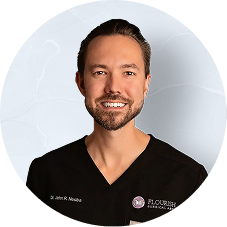
An oral and maxillofacial surgeon (OMS) diagnoses and treats diseases, injuries, and defects involving both the hard and soft tissues of the mouth, jaw, and face. At Cherry Creek Oral Surgery in Denver, Dr. John R. Nesiba is an oral surgeon who performs complex procedures using advanced tools, such as 3D imaging (CBCT scans). Services include:
Wisdom teeth removal, especially for impacted teeth
Bone grafting, sinus lifts, and socket preservation
Surgical exposure of impacted teeth for orthodontic treatment
Biopsies of suspicious oral lesions and oral cancer screening
Facial cosmetic surgery, including genioplasty and custom jaw implants
Treatment of TMJ disorders
Education and Training
The most significant factor in comparing oral surgeons and dentists is the vast difference in their educational paths.
Standard Dental Training
Both dentists and oral surgeons start with the same educational path. After completing an undergraduate degree, they attend an accredited dental school for four years. Upon graduation, they receive either a Doctor of Dental Surgery (DDS) or Doctor of Dental Medicine (DMD) degree. At this point, a general dentist can obtain their license and begin practicing.
Additional Training for Oral Surgeons
An oral surgeon’s education doesn’t stop at dental school. They enter a rigorous, highly competitive hospital-based surgical residency lasting four to six additional years. During this residency, they train alongside medical residents in specialties like general surgery, anesthesiology, and emergency medicine, gaining hands-on experience in anesthesia administration and complex extractions.
This extended training uniquely qualifies them to handle complex surgical procedures and administer advanced anesthesia – something most general dentists are not trained to do.
Areas of Expertise
Dentists specialize in the prevention, diagnosis, and treatment of oral health conditions, helping patients maintain healthy teeth, gums, and overall oral function. Their expertise includes preventive care, such as routine cleanings, exams, fluoride treatments, and patient education, as well as treating cavities, gum disease, infections, and tooth damage through restorative procedures like fillings, crowns, bridges, dentures, and root canals.
Dentists also provide cosmetic treatments, monitor oral health concerns, such as bite alignment and oral cancer, and offer emergency dental services for issues like severe tooth pain, broken teeth, and dental trauma.
Oral surgeons focus on conditions requiring surgical intervention – removing deeply impacted teeth, rebuilding deteriorated bone, placing implants into the jawbone, screening for oral cancer, exposing impacted teeth for orthodontic treatment, treating TMJ disorders, and performing facial cosmetic procedures. Their expertise lies in facial and jaw anatomy, advanced imaging interpretation, and complex surgical techniques.
The Overlap Between Dentists and Oral Surgeons
The most common area of overlap is tooth extractions. A general dentist can perform simple extractions of fully erupted, accessible teeth. However, when a tooth is impacted below the gumline, fractured at the root, or positioned near a nerve, the extraction becomes surgical and is typically referred to an oral surgeon. Similarly, while some general dentists place dental implants, complex cases involving bone loss or sinus proximity are handled by oral surgeons, who have the surgical training to manage those challenges.
Choosing the Right Professional
See your general dentist for:
Routine care (cleanings, checkups, and X-rays)
General restorations (filling cavities, root canals, and placing crowns)
Gum care (treating minor gum pain or bleeding)
Emergency fixes (repairing a broken or chipped tooth)
See an oral surgeon for:
Complex extractions (removal of impacted wisdom teeth)
Advanced restorations (placement of dental implants and bone grafting)
Corrective jaw surgery (or treatments for facial injuries and TMJ disorders)
Biopsies (checking a suspicious lump or sore in the mouth)
Specialized procedures (any surgical care referred by your general dentist)
What to Do If You Don’t Know Which to See
If you’re unsure, start with your general dentist. They can evaluate your condition, take initial X-rays, and determine whether a referral is needed. If your problem is clearly surgical, such as painful wisdom teeth, you can schedule a consultation directly with an oral surgery practice. At Cherry Creek Oral Surgery, consultations with Dr. Nesiba include a thorough evaluation and a customized treatment plan so you know exactly what care you need.
Why Choosing the Right Professional Matters
Getting the right professional involved from the start saves time and leads to a smoother experience. For a complex surgical procedure, such as placing a dental implant or removing an impacted tooth, the expertise of a triple-board-certified oral surgeon provides precision and safety that come from years of dedicated surgical training. Conversely, you don’t need an oral surgeon for a regular procedure, such as a root canal. Matching your needs to the right provider ensures appropriate care.
How Dentists and Oral Surgeons Work Together
Dentists and oral surgeons frequently collaborate. A typical workflow for a dental implant involves the dentist identifying the missing tooth and referring you to the oral surgeon for implant placement and any necessary bone grafting. You then return to your dentist or prosthodontist to have the final crown designed and attached. This team-based approach ensures expert care at every stage, and Cherry Creek Oral Surgery works closely with referring doctors throughout the Denver area to coordinate patient care.
Key Takeaways: Dentist vs Oral Surgeon
Foundation: All oral surgeons are dentists first, but not all dentists are oral surgeons.
Training: Oral surgeons complete 4–6 years of additional hospital-based surgical and anesthesia training after dental school.
Scope: Dentists manage overall oral health. Oral surgeons focus exclusively on complex surgical procedures of the mouth, jaw, and face.
Collaboration: The two professions work together closely, with dentists often referring patients to surgeons for specialized treatment.
Overall, the difference between an oral surgeon and a dentist comes down to training, expertise, and the complexity of care you need. Your dentist is your partner in long-term oral wellness, while an oral surgeon is the specialist for advanced surgical needs.